
Students /
Cohort 2 (2026)
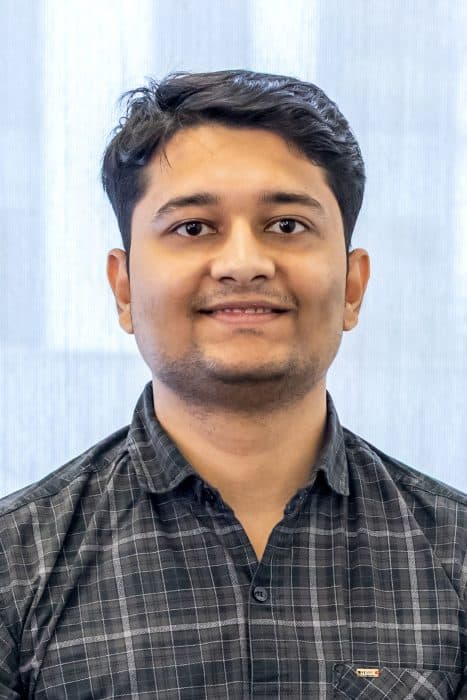
Gaurang Agrawal
I am a first year student in the Quantum Informatics CDT.
Previously I was a Research Engineer at Inria, Université Paris-Saclay within the QuaCS team. I worked on developing category-theoretic models for combs and their compositions across classical, quantum and generalised process-theoretic protocols as well as modelling resources in such scenarios. Before that, I completed my BS-MS with a Physics major and Mathematics minor at the Indian Institute of Science Education and Research Pune, where my thesis investigated quantum supermaps with indefinite causal-temporal structures, their simulability, and their advantages towards metrology and communication.
My research interests lie at the intersections of quantum foundations, applied category theory, and quantum information theory with particular interests in resource theories, higher-order quantum operations, nonlocality and contextuality, communication, and causal structures.
I value being part of the QI CDT because its highly interdisciplinary, multi-institution, cohort structure provides a unique environment to bridge many distinct subfields and foster cross-disciplinary collaborations
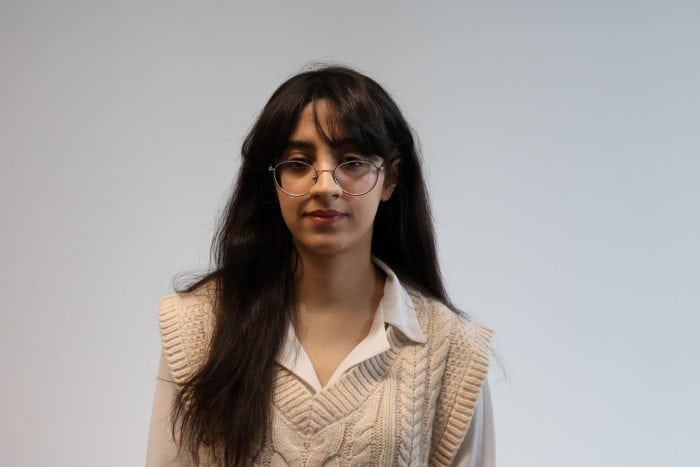
Roja Atashkar
I am a first year student in the Quantum Informatics CDT.
I graduated from Sharif University of Technology with a BSc in Electrical Engineering and a Minor in Physics. I worked on quantum algorithms and their software implementation for my bachelor’s project. My interests thereby lie largely within quantum algorithms, both fundamentals and applications. I am also interested in exploring quantum compilation and circuit optimisation.
Being part of the CDT enables me to develop interdisciplinary skills and gain a broader understanding of different areas of quantum informatics. I also value the CDT’s strong partnerships across academia and industry, as well as the opportunity to meet and work with amazing people along the way.
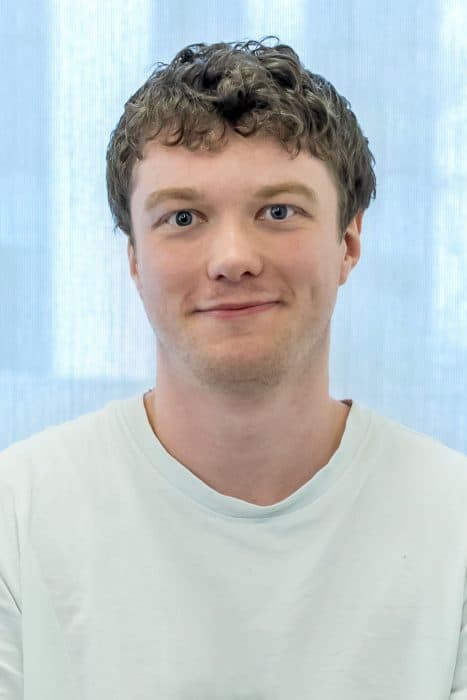
Matthew Gallagher
I am a first year student in the Quantum Informatics CDT.
I completed a BSc in Applied and Computational Mathematics at University College Dublin. I then completed an MSc in Mathematical Modelling and Scientific Computing at the University of Oxford, where my dissertation focused on molecular dynamics simulations. I am broadly interested in algorithms and applications, in particular areas such as tensor networks, simulation methods, chemistry and machine learning.
I value being part of the CDT because it allows me to share the PhD experience and build friendships within a cohort of students working across a variety of interesting research areas.
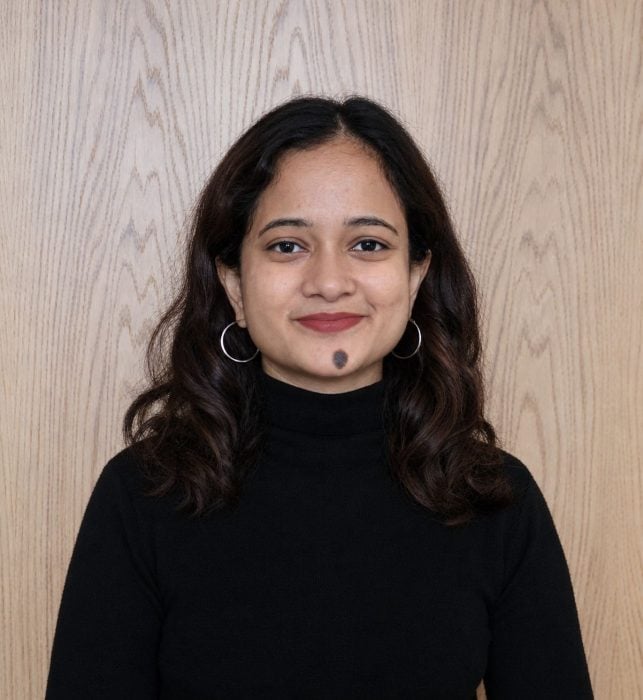
Nivedha Gopinath
I am a first year student in the Quantum Informatics CDT.
I hold a Bachelor’s degree in Technology in Engineering Physics from the Indian Institute of Technology Bombay, where my thesis focused on developing a RBM-assisted SKQD algorithm for quantum many-body systems. I also completed a summer research internship at the California Institute of Technology, where I worked on using Fourier Neural Operators to learn and predict quantum dynamics.
My research interests broadly lie at the intersection of machine learning and quantum science, with a particular interest in AI for science, machine-learning techniques for quantum simulation, and applications of these methods to practical quantum problems.
I value being part of the CDT because of its strong partnerships with industry and the interdisciplinary training it provides.
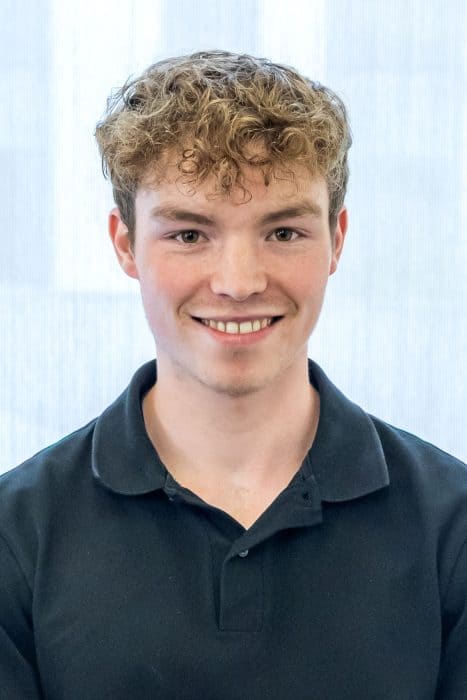
Aidan Hall
I am a first year student in the Quantum Informatics CDT.
I previously completed an Integrated Master’s in Physics at the University of Manchester, where my final-year project focused on designing and optimising techniques to enable searches for rare lepton interactions at the LHC. After a year working in industry, I am joining the CDT to undertake my PhD in collaboration with NPL. I am broadly interested in the path towards realising fault-tolerant quantum computing, including the development of efficient quantum error correction protocols, as well as methods for verifying and benchmarking logical circuits as quantum computers scale up.
I value being part of the CDT due to its interdisciplinary training opportunities, its strong links with industry, and the support that comes from being part of a cohort of students.
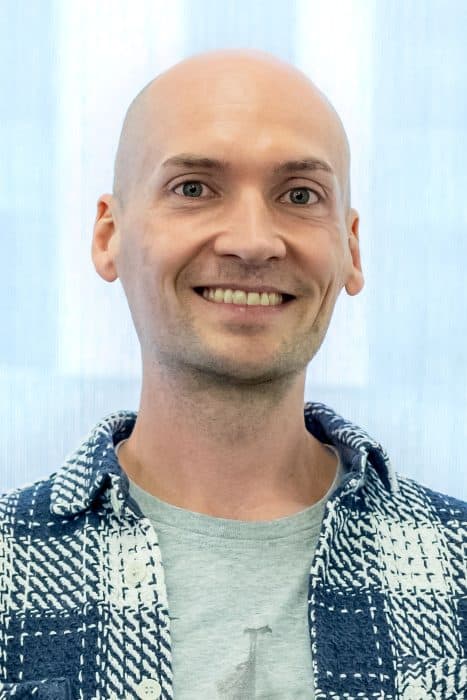
Eric Hughes
I am a first year student in the Quantum Informatics CDT.
After spending many years as a chartered accountant, in 2026 I completed an MSc in Computing at Imperial College London, where my research thesis was in cyber security and the application of Bayesian attack graphs to insurance portfolio risk. I haven’t settled on a research focus for the CDT yet, but currently I am interested in the interface between quantum computing and high-performance computing; compilation and programming languages for quantum computing; and quantum machine learning.
I was attracted to the QI CDT as it provides the opportunity to study quantum informatics without a background in the subject, and to choose electives across mathematics, physics, and computing to align with my specific interests. The taught first year offers the time and space to understand the current landscape of the discipline before deciding on a research topic for the PhD, and I value the cohort structure, with its potential for discussion and learning with people from different disciplines.
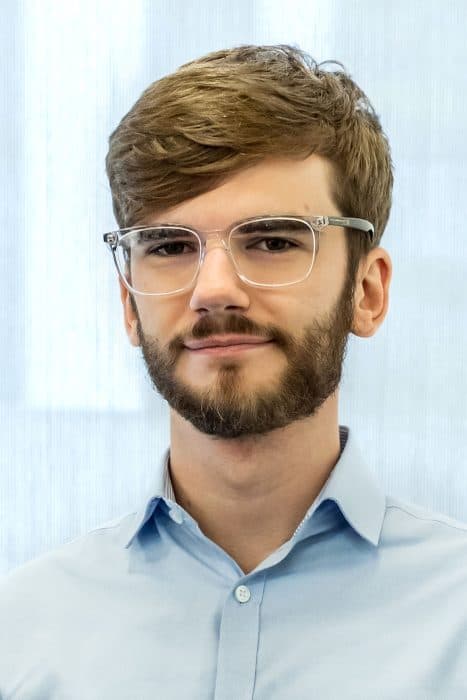
Finn Kearns
I am a first year student in the Quantum Informatics CDT.
I hold an MMathPhys in Mathematical and Theoretical Physics from the University of Oxford, where my dissertation focused on a novel implementation of the renormalisation group using Markov chain Monte Carlo methods. My interests lie primarily in developing and analysing quantum algorithms for near-term applications, specifically those that are intractable using classical computers.
I’m excited to be a part of the QI CDT because it offers the opportunity to undertake interdisciplinary training, to work on a project bridging industry and academia, and to learn from a cohort of peers with different academic backgrounds and interests.
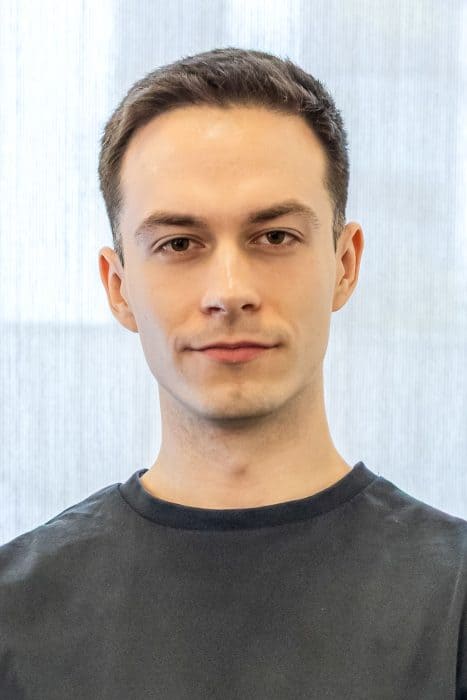
Kostas Kvietinskas
I am a first year student in the Quantum Informatics CDT.
I previously completed an MSc in Quantum Technologies at UCL. My research interests lie broadly in quantum simulation, quantum foundations, and quantum machine learning.
Being part of the CDT allows me to explore different areas of quantum informatics while further developing interdisciplinary skills within a supportive cohort of peers and an environment that cultivates collaborations across fields.
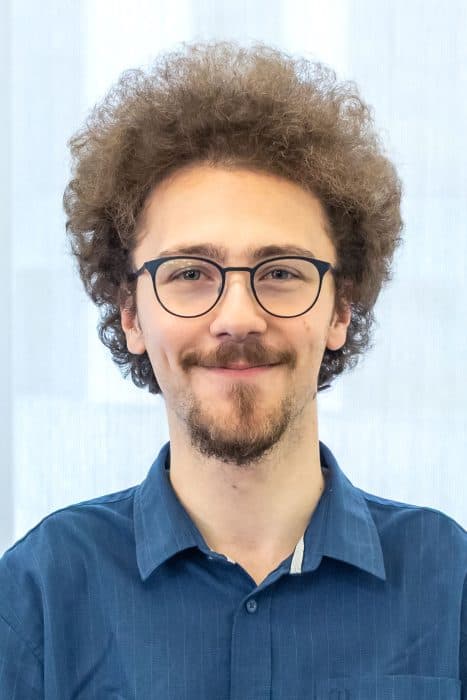
Marcus Lowe
I am a first year student in the Quantum Informatics CDT.
I hold a BSc in Natural Sciences specialising in Mathematics and Physics from the University of Nottingham and a MSc in Quantum Information Science and Technology jointly from the Delft University of Technology and Leiden University. My master’s thesis project was on the Microscopic Description of Quantum Dot Kitaev Chains. My current research interests include condensed matter Physics, tensor networks, many-body simulations and quantum error correction.
I value greatly being part of the QI CDT because of its freedom to let me explore and gain experience in many relevant and exciting areas of quantum informatics as well as its strong industrial and academic connections facilitating many collaborative opportunities.
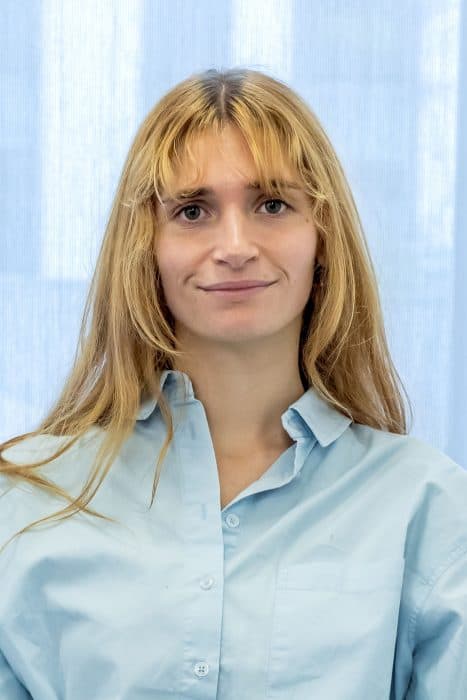
Holly Mitchell
I am a first year student in the Quantum Informatics CDT.
I hold a Master’s degree in Chemistry from Imperial College London. During my Master’s thesis, I designed and synthesised a superselective contrast agent for the early detection of ovarian cancer. More recently, I have worked on quantum simulation of vibronic systems using hybrid qubit–boson architectures.
I am interested in quantum simulation and computational methods for complex many-body systems, and in understanding where quantum architectures offer practical advantages over classical approaches.
I particularly value the CDT’s interdisciplinary structure, which lets me take courses across computer science, mathematics and physics and learn to communicate and collaborate with researchers from other disciplines.
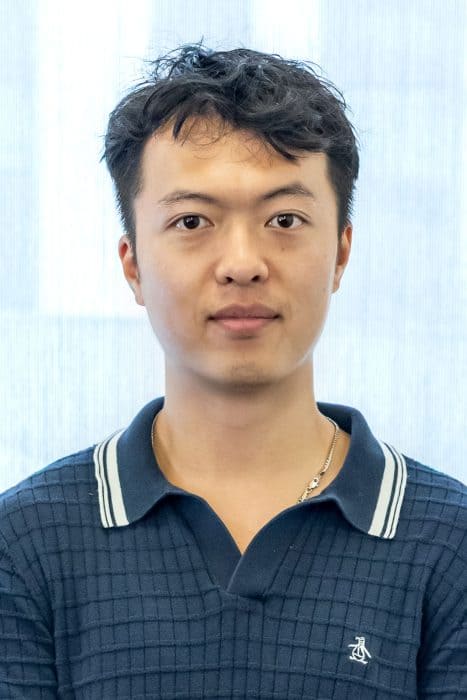
Zhengmao Ouyang
I am a first year student in the Quantum Informatics CDT.
I previously completed a Bachelor’s degree in Software Engineering from the University of Waterloo, where I had the opportunity to work on projects related to quantum key distribution. I then pursued a Master of Applied Science from the University of Toronto, where my thesis applied techniques in quantum machine learning towards problems in cyberattack detection for the power grid. Drawing from prior experience in theoretical computer science and coding theory, my interests at the doctoral level are broadly concerned with the construction and analysis of quantum programming languages, as well as the design of robust mechanisms for quantum error correction.
The best thing about the CDT is the community that it gives you. We have a great cohort of students coming from all different kinds of backgrounds, and a very welcoming group of colleagues from both the first cohort and the quantum software lab. It’s the greatest blessing to be surrounded by people who make you feel that you are exactly where you were meant to be, all along.
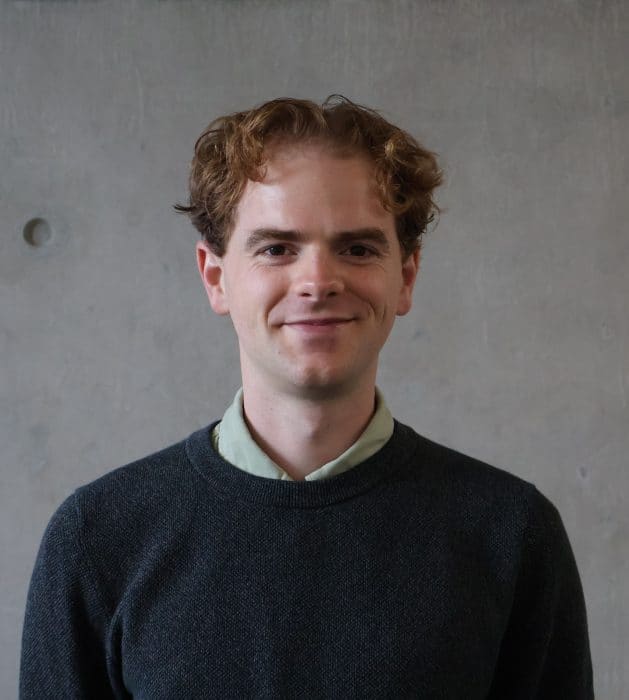
Rafe Whitehead
I am a first year student in the Quantum Informatics CDT.
I previously completed an MPhys in Physics at the University of Manchester, and have spent the last four years working as a data scientist at Frazer-Nash Consultancy, who are sponsoring my PhD. My research interests lie in practical applications of quantum computers in the NISQ era, particularly in optimisation.
I value putting technologies to use in the real world, and the CDT’s industry links and focus on impact make it a great place to do that. I also appreciate its cohort structure and the breadth of its academic members, which make the programme collaborative and interdisciplinary.
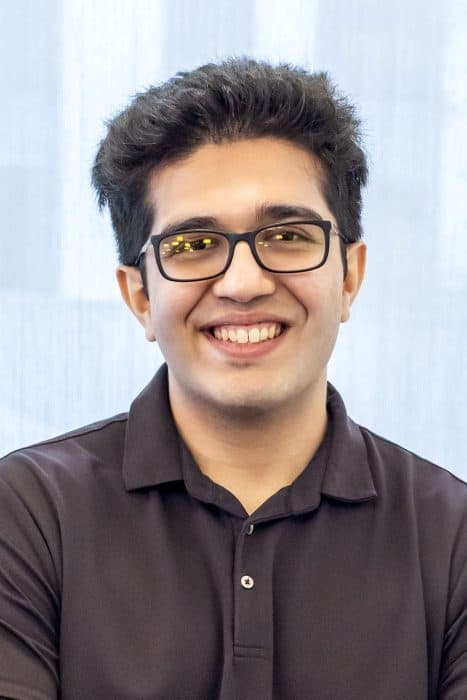
Saumya Shah
I am a first year student in the Quantum Informatics CDT.
I previously completed a Bachelor’s degree in Computing at the National University of Singapore, where I specialised in machine learning. My thesis focused on exploiting physical symmetries in machine learning approaches to accelerate variational ground-state search for quantum many-body systems. I am broadly interested in practical quantum machine learning approaches and their applications to domains such as physics.
I value the CDT’s supportive cohort structure, strong industry connections, and interdisciplinary training, which provide a robust foundation for my research. In particular, the training allows me the flexibility to explore diverse quantum subfields before committing to a specific research specialisation.
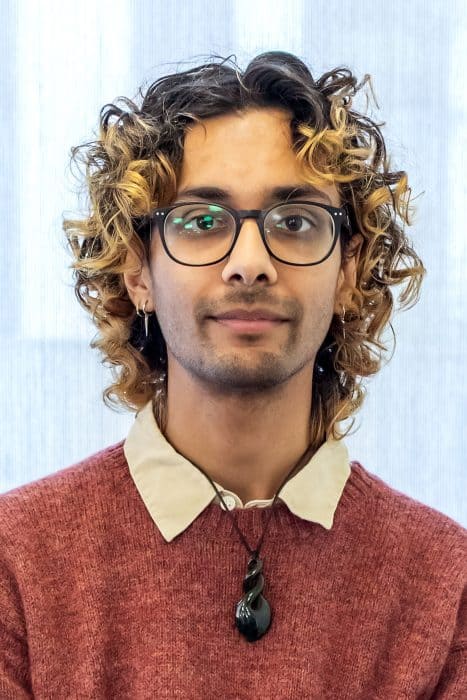
Paarbrahm Singh
I am a first year student in the Quantum Informatics CDT.
I previously completed an MSc in Theoretical Physics from Queen Mary University where I studied Noncommutative Geometry and its applications to Quantum Gravity. I also hold a BA and MMath in Mathematics from the University of Cambridge.
My research interests lie in quantum information theory, foundations, and applications of pure mathematics. I am particularly interested in applying ideas from algebra and category theory to topics in quantum computing.
The interdisciplinary nature of the CDT appeals to me. It allows me to have a much broader knowledge of the field before starting research in my areas of interest.
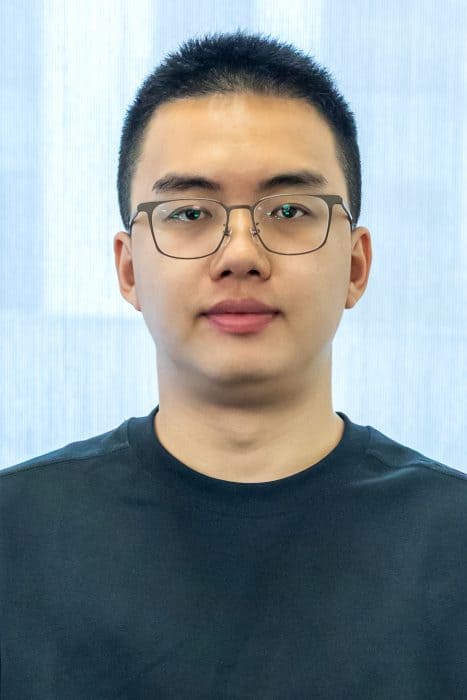
Jeffrey Song
I am a first year student in the Quantum Informatics CDT.
Before joining the CDT, I completed the MASt in Mathematics at the University of Cambridge, following bachelor’s degrees in physics and mathematics at the University of Washington. My academic interests lie at the intersection of physics and theoretical computer science, with a focus on quantum complexity theory, algorithms, and learning theory.
I value the CDT for its supportive community of faculty and students, and for the opportunity to explore beyond my own area of expertise.
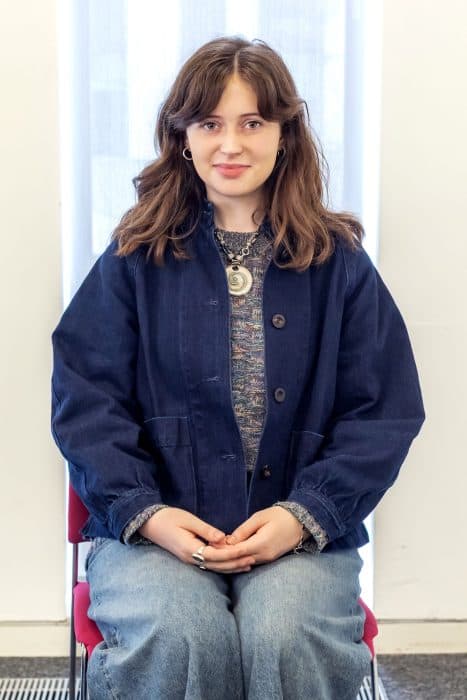
Lauren Stewart
I am a first year student in the Quantum Informatics CDT.
I previously completed a BSc in Physics at the University of St Andrews and an MSc in Quantum Technologies at UCL. My MSc dissertation explored locality as a tool for classically simulating the thermalisation of quantum systems, using Tensor Networks. I am broadly interested in using theory as a tool to better understand the physical world, from simulation of physical systems to quantum foundations.
I value being part of the CDT as it allows the flexibility to expand my learning to areas beyond my undergraduate background, and explore many research directions. The CDT also provides a lively and like-minded peer group, which makes everything extra fun.
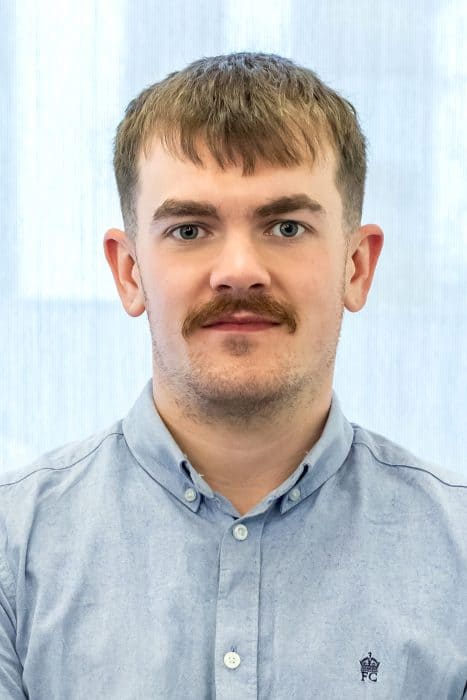
James Timothy
I am a first year student in the Quantum Informatics CDT.
I hold a BSc in Theoretical Physics and an MSc in Mathematics, both from University of Galway. My MSc project focused on quantum circuit compilation and optimisation, using the ZX-calculus as a framework for these tasks. My current research interests lie in the development of tools and techniques for quantum error correction. This includes decoders for quantum codes, compilers for high-level quantum circuits, and methods for discovering new codes with favourable parameters.
I am grateful to be part of the CDT, which provides a uniquely interdisciplinary training environment, strong industry connections, and access to expertise spanning a broad range of subjects.
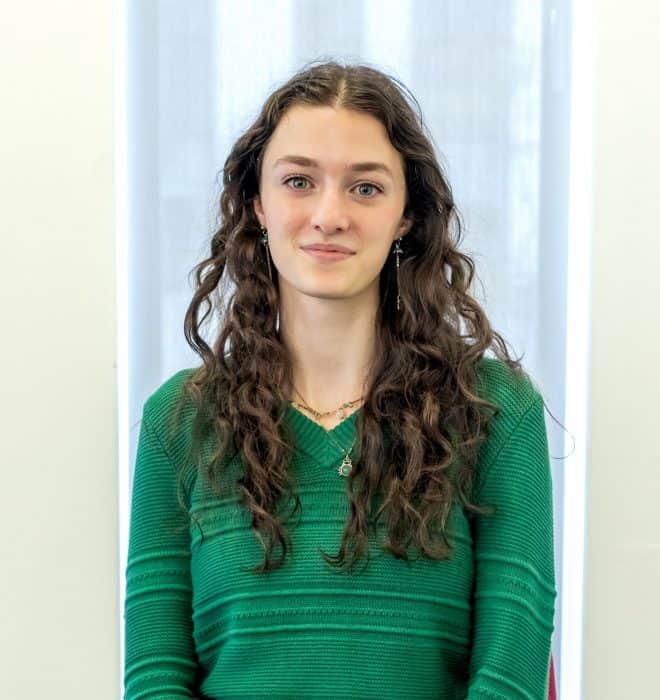
Melissa Wales
I am a first year student in the Quantum Informatics CDT.
I graduated with an MSci in Mathematics and Computer Science from the University of Birmingham, where my dissertation focused on side-channel analysis of CRYSTALS-Kyber, a post-quantum key encapsulation mechanism. My research interests are in post-quantum cryptography, quantum algorithms, computational complexity and security.
The QI CDT is an exciting opportunity to broaden my knowledge across a range of areas within quantum informatics, supported by its interdisciplinary training and collaborative environment.
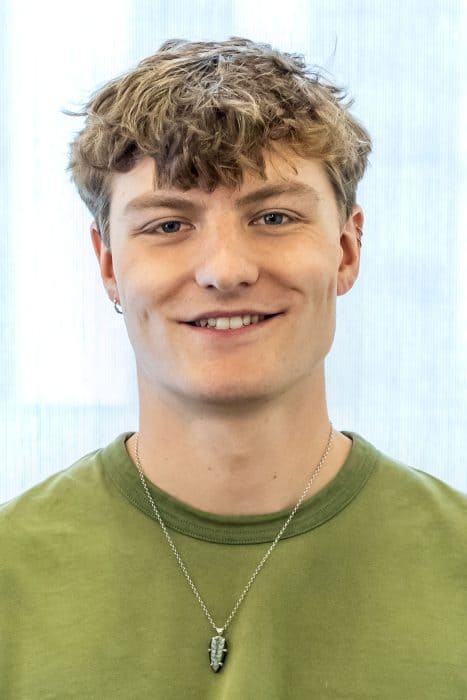
Nicholas Woodford
I am a first year student in the Quantum Informatics CDT.
I previously completed a BA in Physics and a Masters in Mathematical and Theoretical Physics, both at the University of Oxford, where I wrote my masters dissertation on Matchgate Tensor Networks. My research interests lie broadly in classical simulation, complexity, and quantum algorithms.
I value being a part of the CDT because of the interdisciplinary training it provides and the freedom it gives me to collaborate across its many partner institutions in industry and academia